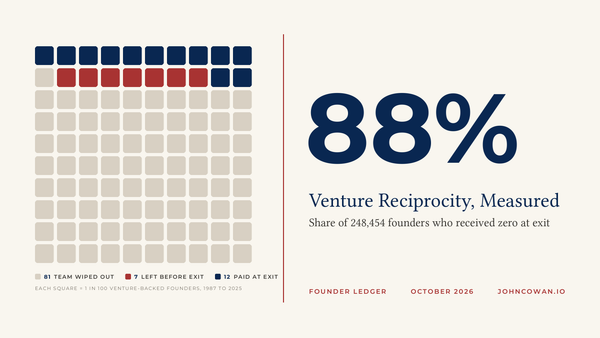
A company can become a better business without becoming a more attractive venture investment. Customers buy. Revenue grows. The operating case gets stronger. The company can still be too small to matter to the fund across the table.
The founder is then asked to solve the investor's problem. Describe a larger market. Raise more. Build toward a larger exit. The financing is no longer following the business plan. It is beginning to write it.
In “Startups face a new K-shaped environment,” recently published in Fast Company, Ronald Razmi describes a venture market that has split in two, with some early- and mid-stage startups turned away despite strong progress. He looks to exits returning capital and a more selective market that rewards product-market fit and traction.
But more money does not, by itself, change what a company must become to qualify for it. More liquidity can restore an investor's ability to write a check. It does not change what the check must return.
That is the question beneath the K, the one we all think about but most are afraid to say out loud. Must the company change to fit the capital, or must the capital change to fit the company?